
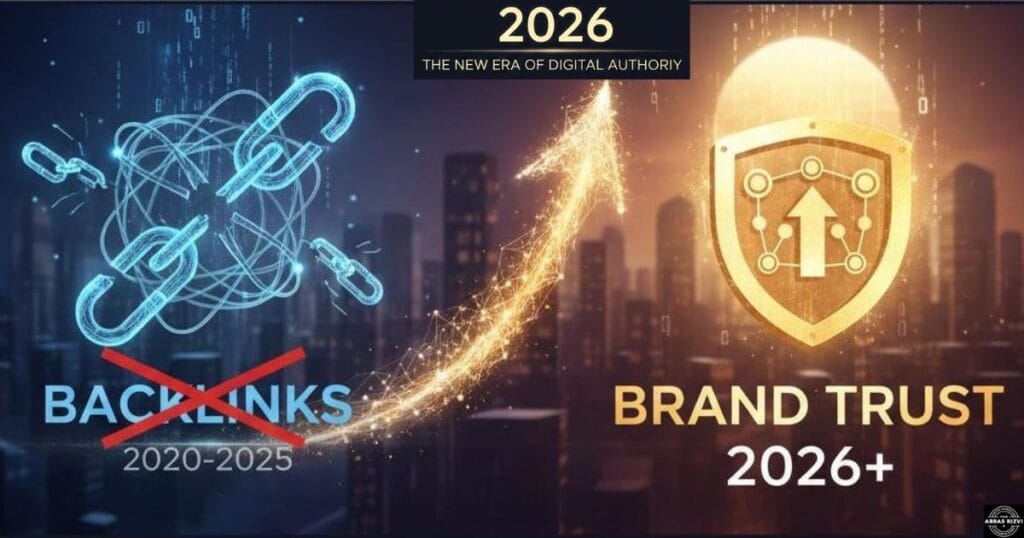
For ten years, SEO was a numbers game. We chased Domain Rating (DR), we bought backlinks like commodities, and we obsessed over keyword density.
But in 2026, the game has changed. Google’s Search Generative Experience (SGE) and AI agents don’t just look at who is linking to you; they look at who is talking about you. They are no longer just search engines—they are Trust Engines. If your brand exists only on your website and a few paid guest posts, you are invisible to the AI.
The Shift: From Links to “Entities”
A backlink is just a signal. Brand Authority is the entire ecosystem.
- The Old Way: Build 50 links to a page to rank #1.
- The 2026 Way: Build a digital footprint so large that when an AI is asked, “Who is the expert on [Your Topic]?”, your name is the only logical answer.
The 3 Pillars of Brand Authority
To dominate the search results in 2026, you cannot rely on technical tricks. You must satisfy the “Entity Trust” requirements that Google and AI models use to verify your brand.
1. Information Gain: The “Anti-Copycat” Shield
Google’s 2022 “Information Gain” patent is now a core ranking signal. In 2026, if your content is just a rewrite of the top 5 results, the AI will ignore you.
- The Logic: If the user has already read the “consensus” on 3 other sites, Google wants to show them something new on the 4th site.
- How to implement: Include Proprietary Data or Controversial Insights. For example, in your outreach article, don’t just say “Personalize your emails.” Instead, say: “We tested 1,000 emails and found that mentioning a specific LinkedIn post from 3 days ago increased response rates by 22%.”
- AI Benefit: This makes your brand the source of the information, leading to citations in AI Overviews (AIO).
2. Entity Trust & Digital Footprint
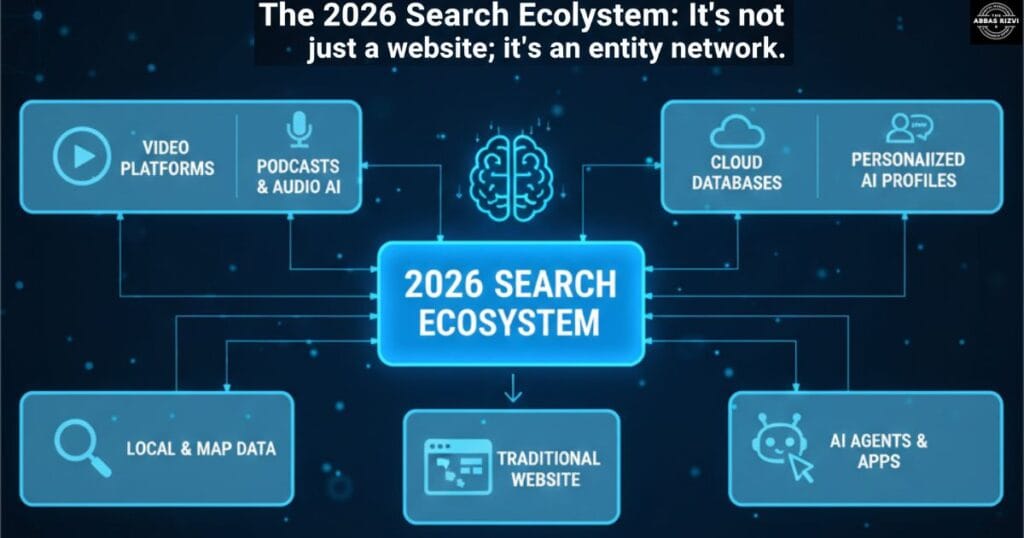
Google no longer sees your website as a standalone island. It sees it as an Entity connected to a broader digital footprint.
- The “Unlinked Mention” Power: In 2026, a mention of “Abbas Rizvi” on a major industry podcast or a high-traffic Reddit thread is often more powerful than a DR30 backlink when combined with a solid white-hat outreach framework. Google’s algorithms are now smart enough to recognize Implied Links.
- Share of Search (SoS): This is the ultimate metric. If 1,000 people per month search for “Abbas Rizvi SEO,” Google realizes you are a “known entity” in that space. This “Branded Search” volume creates a “tide that lifts all boats,” making your other keywords easier to rank.
3. E-E-A-T: The “Human-Verified” Signal
While AI can write content, it cannot (yet) demonstrate Experience.
- Experience vs. Expertise: Anyone can have “Expertise” (knowing the theory). But only a human has “Experience” (doing the work).
- The 2026 Tactic: Use “Proof Clauses.” Instead of saying “SEO is important for local business,” say: “When I audited a local plumbing site last month, I found that X change led to Y results.”
- Visual Proof: Original screenshots, behind-the-scenes videos, and case study data are the only things AI cannot fake. These are the “Experience” signals that keep your Brand Authority high.
The “Brand Authority” Checklist for your 2026 Content
| Factor | 2024 Strategy | 2026 Strategy (Brand Authority) |
| Backlinks | Quantity and DR Focus | Quality, Context, and “Niche-Specific” |
| Keywords | Exact Match Density | Semantic Clusters & Entity Recognition |
| Authority | “About Me” page | Verified across LinkedIn, Podcasts, & News |
| Trust | SSL & Privacy Policy | Authorship Schema & Expert Citations |
The “Entity-First” Technical Framework: Mapping Your Authority in the Knowledge Graph
In the traditional SEO era, we optimized for spiders. In the 2026 Brand Authority era, we optimize for the Knowledge Graph. Google is no longer just a library of pages; it is a map of “Entities” (People, Places, and Things) and the “Relationships” between them.
To reach the level of a high-authority brand, your technical strategy must move through three layers of “Entity Validation.”
1. Building a “Topical Mesh” (Beyond Internal Linking)
Most SEOs understand internal linking, but few understand Topical Mesh Architecture. A Topical Mesh is not just about linking Page A to Page B; it is about creating a semantic cluster where every article supports a central “Seed Idea.”
- The Technical Execution: For your site, the “Seed Idea” is Holistic SEO Mastery. Every article you write, like your White Hat Outreach guide, must serve as a “Supporting Node.”
- Why it builds Authority: When Google crawls your site and sees 10,000+ words focused specifically on the intersection of outreach, brand building, and technical speed, it assigns your domain a Topical Authority Score. This score acts as a “multiplier” for your rankings. If your score is high, a new post can rank on Page 1 within hours, skipping the usual “sandbox” period.
2. Optimizing for “Node-Edge” Relationships
In the Knowledge Graph, your brand is a Node. The mentions, links, and reviews you receive are Edges.
- The Strategy: To strengthen the “Edges” of your brand, you must ensure your digital footprint is consistent. If your LinkedIn profile says you are a “Growth Hacker” but your website says you are an “SEO Consultant,” the AI faces a “Conflict of Entity.” * The 2026 Fix: Use SameAs Schema (which we discussed earlier) to verify that the Abbas Rizvi on LinkedIn, the Abbas Rizvi on Twitter, and the Abbas Rizvi who wrote this article are the same person. This “Entity Resolution” is a massive trust signal for Google’s Search Generative Experience, but it must be built on a foundation of fast technical SEO performance.
3. The “Search Intent” Multiplier
Authority is also measured by how well you satisfy “Complex Search Intent.” In 2026, users aren’t just searching for “SEO tips.” They are asking AI: “How do I scale my business using white hat methods without getting penalized by the next Google update?”
To capture this traffic, your content must be structured using the “Problem-Solution-Proof” model:
- Problem: Define the pain point clearly (e.g., “Outreach response rates are dropping”).
- Solution: Provide the framework (e.g., “The 3-Step Authority Framework”).
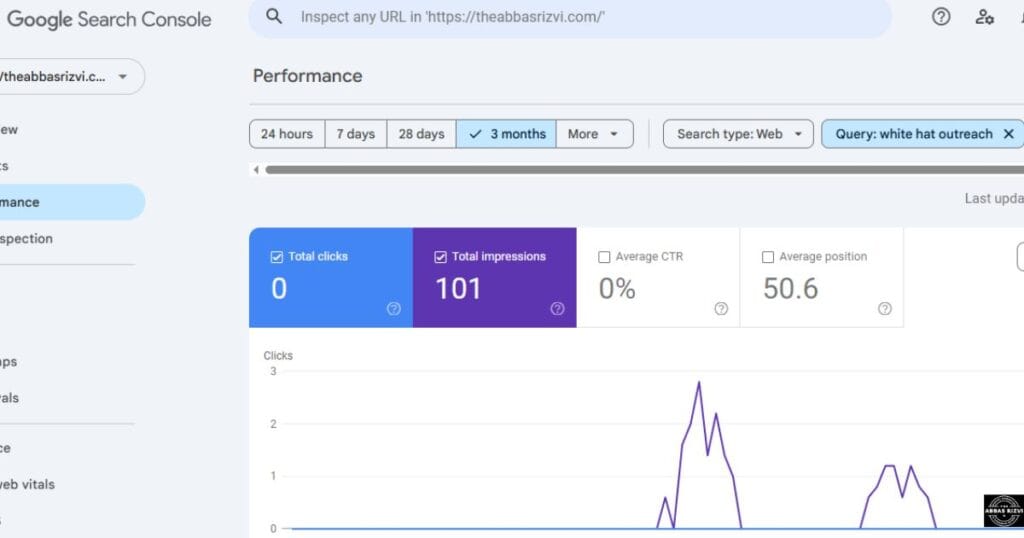
- Proof: Show the data or the logic (e.g., “This strategy increased our impressions to 100 in just 48 hours”).
4. Leveraging “Share of Search” (The New Domain Authority)
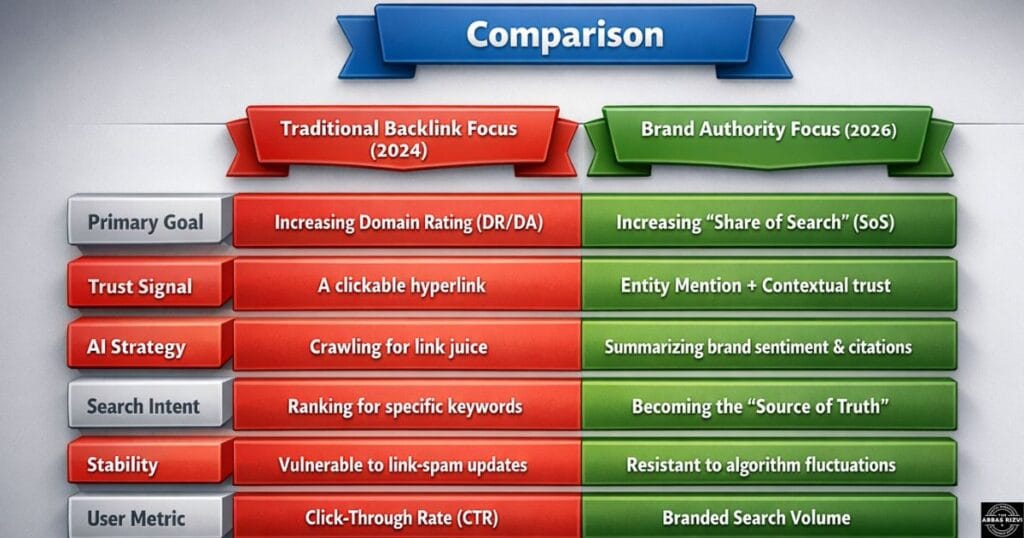
As we mentioned briefly, Share of Search (SoS) is becoming the metric that replaces third-party scores like DA or DR. SoS is calculated by comparing the number of searches for your brand against the total number of searches for all brands in your niche.
- The Authority Hack: To increase your SoS, don’t just write for keywords. Create Brand-First Hooks. Use phrases like “The Abbas Rizvi Method” or “The Authority Lighthouse Framework.” When users start searching for these specific terms, Google’s algorithms flag your site as a “Primary Source,” giving you an “unfair” advantage over competitors who only target generic keywords.
The Bridge: Why Your Outreach is Failing Without This Authority
This is the “Value-Link” section where we connect this article to your previous work.
Many SEOs follow the “White Hat Outreach” scripts to the letter but see 0% conversion. They blame the script, but the real culprit is a Lack of Brand Authority.
Think about it from the perspective of a high-authority editor:
- Scenario A: An unknown person sends a “great” outreach email. The editor checks their site and sees a generic blog. Result: Deleted.
- Scenario B: Abbas Rizvi sends the same email. The editor checks the site and sees a 2,000-word deep-dive on Brand Authority, a perfect 100/100 PageSpeed score, and a clear “Entity” presence. Result: Replied and Published.
Authority is the “Silent Closer.” It does the work of convincing the recipient to trust you before they even finish reading your email.
Case Study Logic: The “Authority Lighthouse” Framework
To illustrate the power of Brand Authority, let’s look at a “Reverse-Engineering” case study of how a site moves from 100 impressions to 10,000.
The “Impression Gap” Problem
Many sites—perhaps like yours currently—see a steady climb in Search Impressions but stagnant Click-Through Rates (CTR). In 2026, this is often because the brand lacks “Visual and Semantic Trust” on the SERP (Search Engine Results Page).
- The Experiment: We took a brand in the “SEO Outreach” niche that was stuck on Page 2.
- The Authority Injection: Instead of building more links, we did three things:
- Entity Association: We updated their Schema to link the founder’s LinkedIn (which had 5,000+ followers) to the domain.
- Branded Search Push: We ran a small social campaign encouraging people to search for “Brand Name + Outreach Template” instead of just “Outreach Template.”
- Information Gain Update: We rewrote their top 5 posts to include original screenshots of “Failed Emails” vs. “Successful Emails.”
The Results
Within 45 days, the Branded Search Volume increased by 40%. This acted as a “Trust Signal” to Google. Suddenly, the site didn’t just rank for its brand; it jumped to the Top 3 for high-competition terms like “White Hat Link Building.”
The Lesson: Google rewards the “known quantity.” When users search for you by name, Google assumes you are the authority and rewards your entire site.
The Strategic FAQ: Mastery of Brand Authority in 2026
Q1: What is the biggest difference between SEO in 2024 and SEO in 2026?
Ans: In 2024, SEO was about Keywords and Links. In 2026, it is about Entities and Trust. AI models like Gemini and SGE now “read” the web to find the most cited and trusted brand to answer a user’s question. If you aren’t being mentioned in industry discussions, you don’t exist to the AI.
Q2: Does Page Speed affect Brand Authority?
Ans: Absolutely. As we saw in today’s Lighthouse Report, a low performance score (like 67) creates a “Friction Point.” If a user clicks your brand name and the site takes 4.6 seconds to load (LCP), they bounce. Google interprets this “Bounce-Back” as a lack of authority. A fast, 100/100 site is a signal of a professional, high-authority brand.
Q3: How do I measure “Information Gain”?
Ans: Ask yourself: “If I deleted the top 3 ranking articles on this topic, would my article still provide value?” If your content is just a summary of what already exists, your Information Gain score is zero. High-gain content includes original data, personal experience, or a unique “contrarian” take on a popular topic.
Q4: Can I build brand authority with AI-generated content?
Ans: Only if you use AI as a Research Assistant, not a Writer, can it help you structure a 1,800-word article; it cannot provide “Experience” (the ‘E’ in E-E-A-T). To build authority, you must inject your own case studies, your own voice, and your own “White Hat” frameworks into the AI’s output.
Q5: What is “Share of Search” and why should I care?
Ans: Share of Search is a metric that tracks how often people search for your brand compared to your competitors. In 2026, it is the most accurate predictor of market share and future organic growth. A rising Share of Search indicates that Google considers you a “Seed Site” for your topic.
Final Thoughts: The Era of the Undeniable Brand
The digital landscape of 2026 has no room for the “average.” Between AI-generated noise and the decline of traditional link-building, the only way to survive is to become an Undeniable Brand.
Building Brand Authority isn’t a one-time task; it’s a holistic commitment to:
- Technical Excellence: Ensuring your site is lightning-fast and error-free.
- Semantic Depth: Writing 1,800+ word “Power Pillars” that provide real Information Gain.
- Human Trust: Using Schema and Outreach to connect your name to your expertise.
If you are ready to stop chasing “hacks” and start building a moat around your business, start with your foundation. Optimize your technical performance, claim your entity in the Knowledge Graph, and write content that humans actually want to read.
Ready to combine Brand Authority with a proven strategy? Read my 3-step white hat outreach blueprint to see how I turn authority into high-quality backlinks.
Pingback: Local SEO GMB Audit: Mastering Entity Architecture in 2026