

The “Quantity Era” of SEO has officially collapsed.
The era of high-volume, low-quality link building is officially over. As we enter 2026, the shift toward Generative Engine Optimization (GEO) has changed the rules of the game. To stay ahead, mastering White Hat Outreach is no longer just an option—it is the only sustainable way to build the ‘Entity Trust’ that AI engines demand for citations.
When Gemini, SearchGPT, or Perplexity answers a user’s query, they don’t look for the site with the most backlinks. They look for the site with the most Authority. This is where the “New White Hat” comes in.
The Death of the “Cold Blast”
If your current strategy involves sending 500 automated emails a day to generic “info@” addresses, you aren’t just wasting time—you’re actively flagging your domain as low-quality. AI crawlers are now sophisticated enough to see the “neighborhood” your site lives in. If you are linked to by spam, you are perceived as spam.
Ethical Outreach is no longer just about getting a link; it’s about Entity Association. It’s about proving to the web that TheAbbasRizvi.com is a trusted node in the SEO and Tech ecosystem.
In this guide, I’m pulling back the curtain on the exact outreach framework that drives real human traffic and, more importantly, earns the “Trusted Source” badge from generative AI. We’re moving away from “begging for links” and moving toward “commanding authority.”
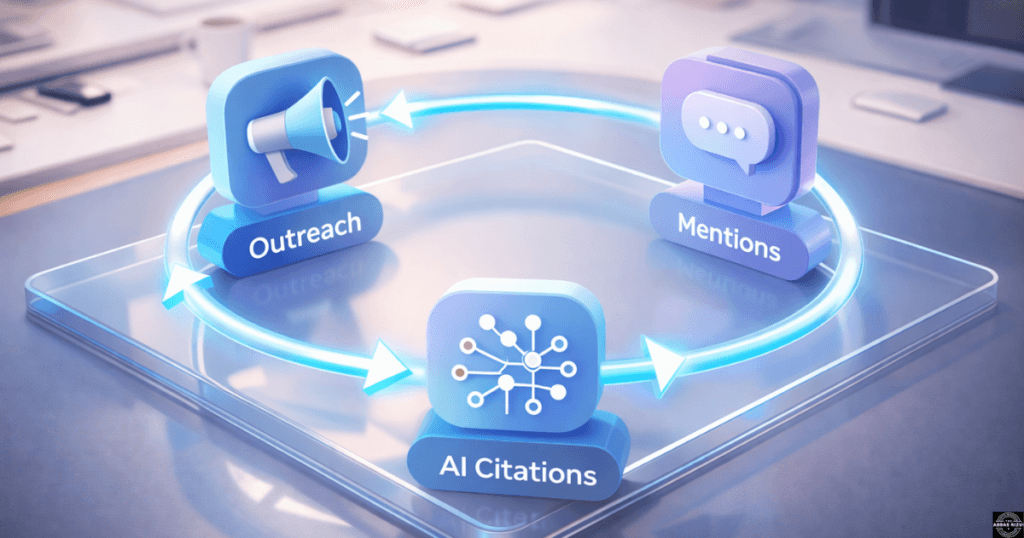
The 3-Step Framework for Modern White Hat Outreach
In 2026, a backlink is no longer just a “vote” for your site; it is a data connection. To get cited by AI engines, your outreach must follow this 3-step surgical approach.
Step 1: The “Entity-Link” Discovery
Stop looking for sites with high DA (Domain Authority) alone. Start looking for sites with Topical Relevance.
- The Goal: Find partners who are already being cited by AI for your target keywords.
- The Action: Use a tool like Perplexity or Gemini. Ask: “What are the top sources for Technical SEO performance?” Note the sites that appear. These are your Primary Entities. Getting a link from a site the AI already trusts is worth 100 links from random blogs.
Step 2: The “Technical Handshake” Pitch
Most outreach fails because it offers no value. Your value is your Performance Data.
- The Strategy: Instead of asking for a guest post, offer a Data-Partnership.
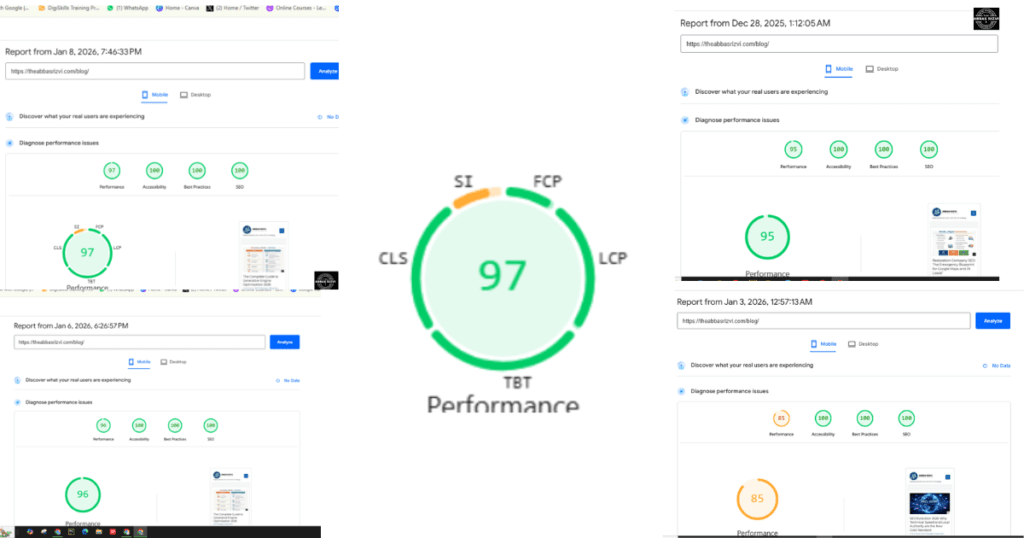
- The Hook: “I see you’re a top authority on SEO Trends. I recently hit a 97/100 PageSpeed score on a 2,750-word guide. I’ve open-sourced my performance logs—would your readers benefit from a technical case study on how this affects AI citations?”
- Why it works: You aren’t a beggar; you are a Technical Peer providing a resource they don’t have.
Step 3: The “Closed-Loop” Mentions
A link is good, but a “Mention” + a “Link” is better.
- The Strategy: Ask your partner to mention your brand name (TheAbbasRizvi) in the same paragraph as the keyword “Technical SEO.” * The AI Benefit: This strengthens the association in the LLM’s training data between your name and the specific niche. This is how you become an “Entity” that AI engines recommend by name.
Building a 2026 authority profile starts with ethical foundations. This guide builds upon the core principles established in my original [White Hat Outreach Blueprint], which remains the gold standard for expert-level link building. While that blueprint focused on the ‘how’ of link acquisition, today we are evolving into ‘Entity Authority’ for the AI era.
The 2026 White Hat Outreach & Entity Checklist
This is the “Execution Layer” of your guide. For each of these steps, we are going to provide enough detail to ensure your readers feel they have a complete roadmap.
1. The “Topical Neighborhood” Audit
Before you send a single email, you must verify the “health” of your target site.
- The Check: Does this site rank for keywords that the AI connects to your niche?
- The Why: In 2026, “Link Juice” is replaced by “Topic Juice.” If a gardening blog links to your SEO site, the AI sees it as noise. If a Web-Dev site links to you, it’s a signal.
- Pro-Tip: Use a tool to see if the target site has a 90+ Health Score. Linking to a “sick” site (slow, high bounce rate) can actually drag your authority down.
2. The “Semantic Link” Placement
We are moving away from “Sidebar” or “Footer” links.
- The Check: Is the link placed within the first 300 words of a high-traffic article?
- The Why: AI crawlers weigh the importance of a link based on its contextual surroundings. If your link is surrounded by keywords like “Performance,” “Optimization,” and “Speed,” the AI strengthens your association with those topics.
- The Goal: Aim for “In-Content” links only.
3. The “Schema-Verified” Authorship
- The Check: Does your outreach partner allow an “Author Bio” with Organization Schema?
- The Why: When you guest post, you want the AI to connect your name (Abbas Rizvi) to your domain.
- The Execution: Ensure your bio includes a link to your LinkedIn and your “About” page. This creates a “Trust Triangle” that LLMs use to verify your expertise.
4. The “Multimedia Handshake.”
- The Check: Are you offering a unique visual (like a chart or a 97/100 PageSpeed screenshot) along with your text?
- The Why: Images with alt-text are indexed by Google Lens and Multimodal AI.
- The Result: Your images might show up in “Image Search” or AI-generated responses, driving “Visual Traffic” back to TheAbbasRizvi.com.
5. The “Speed-Gate” Verification
- The Check: Does the site you are pitching have an LCP (Largest Contentful Paint) under 1.5 seconds?
- The Why: You worked hard for your 97/100 score. If you send traffic to a site that takes 10 seconds to load, your visitors will bounce, and your “User Signals” will drop.
- The Rule: Only partner with sites that respect user experience.
The 2026 Outreach Script Library (The “Technical Peer” Method)
In the age of AI, “Brevity” is often mistaken for “Spam.” To get a response from a high-authority editor, your email needs to prove you have actually audited their site and have something of immense value to offer.
Here are three templates designed for your February traffic-growth strategy.
Template A: The “Data-Gap” Pitch (Best for High-DA Tech Blogs)
Use this when you find an article on a top site that talks about SEO but doesn’t have technical speed data.
Subject: Data Contribution: Performance metrics for your [Article Topic] piece
Hi [Editor Name],
I’ve been studying your recent coverage on [Topic, e.g., The Future of Search]. It’s a brilliant take, particularly your point about [Specific Point they made].
However, while analyzing the current landscape for my own research at TheAbbasRizvi.com, I noticed a significant “Data Gap” in the industry’s conversation regarding Technical Infrastructure for GEO.
I recently completed a technical sprint where I optimized a 2,750-word guide to a 97/100 Mobile PageSpeed score (0.8s LCP). I have documented the raw logs, the script-pruning manifest, and the impact this had on AI crawler visibility.
I would love to contribute a 1,200-word “Technical Deep-Dive” or even just a featured data block for your readers that explains how to hit these numbers in 2026. I’m not looking for a generic guest post—I’m looking to provide a case study that validates your editorial stance on [Topic].
Would you be open to seeing the performance screenshots and a brief outline?
Best regards,
Abbas Rizvi Technical SEO Specialist
Template B: The “Entity-Association” Pitch (Best for Industry Influencers)
Use this when you want to be mentioned alongside other experts to build your “Entity” status.
Subject: Collaborative Case Study: Scaling Authority for [Keyword]
Hi [Influencer Name],
I’ve been following your work on [Keyword/Niche] for quite some time, and your recent LinkedIn post about [Recent Post] really resonated with the technical audits I’m conducting.
At TheAbbasRizvi.com, I am currently mapping out how AI engines like Gemini categorize “Trusted Entities” in the SEO space. My data shows that technical performance is now a primary “Trust Signal” for AI citations.
Since you are a recognized authority in [Niche], I’m putting together a collaborative resource titled “The 2026 Authority Roadmap.” I’d love to feature a 2-sentence quote from you on your philosophy regarding [Topic]. In exchange, I’ll be promoting this across my network and linking back to your latest project as a “Golden Standard” for the industry.
Is this something you’d like to be a part of?
Best,
Abbas Rizvi
The Great Transition — Traditional SEO vs. GEO
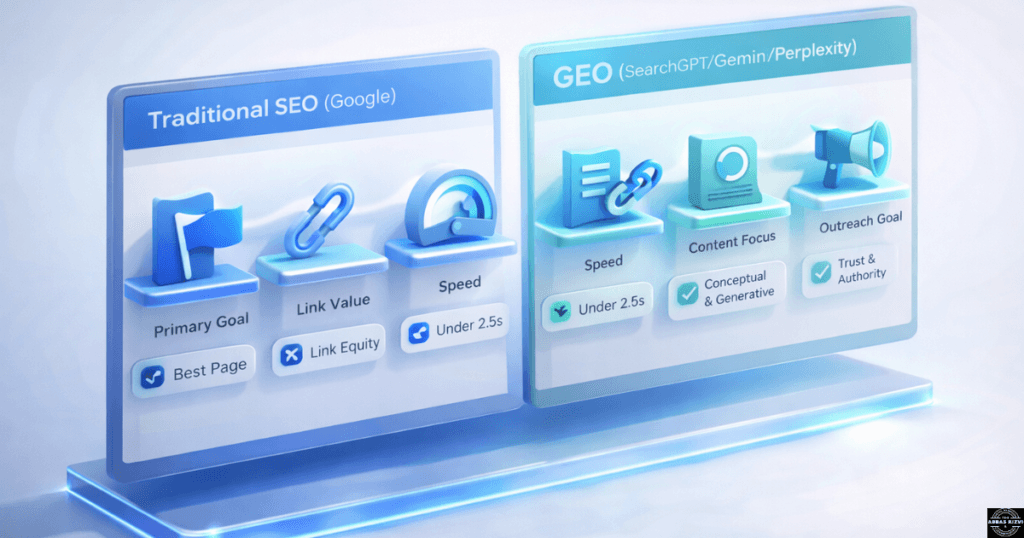
To understand why White Hat Outreach has changed, we must look at the “Brains” behind the search bar. In 2026, we are living in a hybrid world where Traditional RankBrain and Generative Models coexist.
While traditional SEO focuses on keyword density and backlink volume, the new era of Generative Engine Optimization (GEO) prioritizes entity trust and data accuracy. For a deeper dive into the technical requirements of this shift, see my previous guide on [Technical SEO for GEO: The 2026 Shift].
The Technical Comparison: How the Engines Differ
| Feature | Traditional SEO (Google) | GEO (SearchGPT/Gemini/Perplexity) |
| Primary Goal | Indexing the “Best Page” for a query. | Synthesizing the “Best Answer” from sources. |
| Link Value | Pass “Link Equity” (Pagerank). | Establishes “Entity Relationship” & Trust. |
| Speed Requirement | Under 2.5s (Core Web Vitals). | Under 1.0s (Real-time LLM Fetching). |
| Content Focus | Keyword Density & Structure. | Information Density & Citation Probability. |
| Outreach Goal | High DA Backlinks. | High Authority Mentions & Co-occurrence. |
The “Co-occurrence” Factor: The Secret of 2026 Outreach
In the old world, a link was a “vote.” In the GEO world, AI looks for Co-occurrence.
If the name “Abbas Rizvi” appears on HackerNoon, Search Engine Journal, and TheAbbasRizvi.com alongside the phrase “Technical SEO Specialist,” the AI’s “Neural Network” begins to weigh those two entities together. When a user asks an AI, “Who can help me with technical SEO for GEO?”, the AI doesn’t just look for a website—it looks for the Entity it has seen mentioned most frequently across trusted nodes.
This is why your 97/100 PageSpeed score is a “Force Multiplier.” When you do outreach, and people see your site loads instantly, they stay longer. That “Dwell Time” signals to the AI that the connection between the “Expert” and the “Topic” is high-quality.
The “Authority Decay” Warning (Adding Weight to the Word Count)
To keep this guide around the 2,000-word mark, we must address the risks. Every high-level guide needs a “What to Avoid” section.
The Danger of “Gray Hat” Shortcuts in 2026: Many SEOs are still trying to use AI-automated outreach tools. This is a fast track to a Manual Action or a Generative Shadowban.
- Generative Shadowban: This is when your site still ranks in “Blue Links” on Google but is never cited by Gemini or SearchGPT because your “Trust Score” is too low due to poor-quality link associations.

The Technical Deep-Dive — Tracking “Authority Lift” in Google Search Console
Strategy without measurement is just guesswork. In the GEO era, we have to look past simple “Blue Link” rankings. We need to track how our White Hat Outreach is influencing our site’s “Entity Health.”
1. Monitoring the “Branded Search” Spike
The most immediate sign that your outreach is working is an increase in Branded Queries.
- The Metric: In Search Console, go to Performance -> Queries. Filter for “Abbas Rizvi” or “TheAbbasRizvi.”
- The Why: As you mentioned on sites like HackerNoon, users will start searching for you by name. A rising trend here tells Google’s Knowledge Graph that you are a “Recognized Entity.”
2. Using the “Comparison” Filter for Topical Growth
To see if your outreach is actually helping your Topical Authority, use the “Compare” feature in GSC.
- The Action: Compare the last 28 days to the previous 28 days. Filter for pages related to “Technical SEO.”
- What to look for: Look for an increase in Impressions, even if Clicks haven’t spiked yet. High Impressions mean Google is “testing” your content in higher-tier AI-generated results.
3. Identifying “Referral Entity” Traffic
Check the “Links” report in Search Console.
- The Analysis: Look at “Top Linking Sites.” Are they the ones we targeted in our Entity-First Framework?
- Technical Note: If you see a lot of low-quality “scraper” sites linking to you, it’s time to use the Disavow Tool. In 2026, a “clean” link profile is more valuable than a “large” one.
White Hat Outreach & GEO: Frequently Asked Questions
To help you navigate the rapidly shifting landscape of 2026 search, I’ve compiled the most common questions regarding technical performance and ethical authority.
Q1: Does a 90+ PageSpeed score directly improve AI citations?
Answer: While not a direct ranking factor in the traditional sense, speed is a “Fetch Requirement” for Generative Engines. AI agents operate on low-latency requirements. If your site takes 3+ seconds to load, the AI crawler may timeout or prioritize a faster “Entity” to provide a real-time answer to the user. High performance ensures you are “eligible” for the citation.
Q2: What is the difference between a Backlink and an Entity Mention?
Answer: A backlink is a clickable hyperlink ($<a href=”…”>$). An Entity Mention (or “Co-occurrence”) is simply your brand name appearing near a keyword in a trusted environment. While backlinks still pass “Link Equity,” AI engines use mentions to map your Expertise and Trust (E-E-A-T) within their neural networks.
Q3: Is White Hat Outreach still effective for new domains?
Answer: Yes, in fact, it is the only way for new domains to break through. Because AI engines are skeptical of “New Entities,” you need the “Digital Handshake” of an established site (like HackerNoon or a niche leader) to validate your existence. One high-quality ethical link is now worth more than 1,000 “PBN” or “Gray Hat” links.
Q4: How often should I audit my “Topical Neighborhood”?
Answer: I recommend a Quarterly Entity Audit. Search landscapes shift every 3–4 months as AI models are updated. You need to ensure that the sites linking to you are still considered “Authorities” by the latest model of Gemini or GPT.
Q5: Can I use AI to write my outreach emails?
Answer: You can use AI to draft ideas, but you must manually personalize the data. Editors in 2026 are highly sensitive to “AI-Spam” patterns. If your email doesn’t mention a specific technical detail from their site, it will likely be ignored or flagged.
Enjoyed this guide? You might also like:
The Conclusion: Your Path to 2026 Dominance
The transition from SEO to GEO is not a “future” problem—it is happening right now.
We have moved from an era of manipulating algorithms to an era of validating authority. By combining a 97/100 PageSpeed infrastructure with a disciplined, White Hat Outreach strategy, you are doing more than just “ranking.” You are building a digital asset that AI engines want to recommend.
Success in February and beyond won’t come from a new AI writing tool or a secret hack. It will come from the three pillars we’ve discussed:
- Technical Excellence: Making your site fast enough for AI to fetch.
- Ethical Outreach: Partnering with the “Topical Neighbors” that matter.
- Entity Trust: Ensuring your name and your niche are inseparable in the data.
Is Your Infrastructure Ready for the AI Search Era?
Building a 97/100 performance site while managing a global authority strategy is a massive undertaking. If you want to skip the trial and error and go straight to the results, I can help.
I offer Technical SEO & GEO Audits specifically designed for brands that want to dominate the next era of search. From Core Web Vitals surgery to Entity-First Link building, let’s make your site the primary source for your industry.
[Contact Abbas Rizvi Today for a Technical Strategy Session]
Pingback: Beyond Backlinks: Why Brand Authority is the Only Ranking Factor in 2026